
Inside the engine block, pistons are violently pumping up and down, while valves are constantly opening and closing to let air in and exhaust out. If their timing is off by even a fraction of a second, the pistons will smash right into the valves. If that happens while you’re driving? Yeah, it’s pretty much game over for your engine. The lifeline that prevents this catastrophic crash and keeps everything moving in perfect harmony is your timing belt (or chain).
The Quiet Ticking Clock: The Rubber Timing Belt
For a long time, most cars used a rubber “timing belt.” Because it’s made of rubber and reinforced cords, it runs incredibly quietly and smoothly. It’s also cheaper for manufacturers to produce.
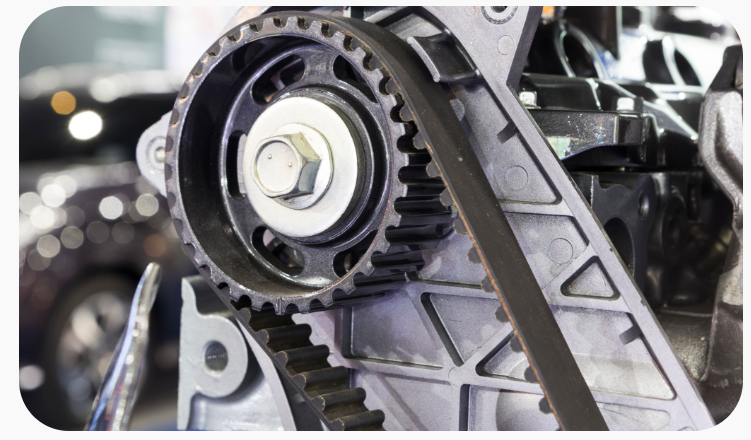
But there’s a catch: it doesn’t last forever. Baking in the extreme heat of the engine bay, that rubber eventually dries out, cracks, and weakens. This is exactly why mechanics nag you to replace it every 60,000 to 100,000 miles. If you ignore it and the belt snaps on the highway, you’re looking at an engine rebuild that will cost you thousands. Also, when you do replace it, you usually have to replace the water pump and pulleys at the same time, making it one of the more painful maintenance bills you’ll face.
The Modern Standard: The Heavy-Duty Timing Chain
To solve the headache of snapping belts, the auto industry largely shifted back to the “timing chain.” Picture a heavy-duty bicycle chain, but made of high-strength steel, running inside your engine.
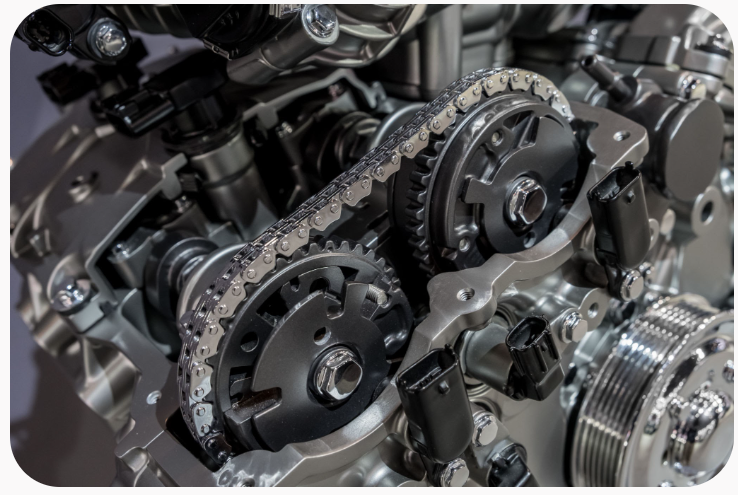
The absolute best thing about a timing chain is its lifespan. Because it’s metal, it’s highly unlikely to just snap out of nowhere. Automakers generally consider them to be a “lifetime” part. Years ago, they were notorious for making a rattling, metallic noise, which is why luxury cars avoided them. But modern engineering has made them surprisingly quiet. Today, the vast majority of new cars roll off the assembly line with a timing chain rather than a belt.
The Mechanic’s Reality Check: “Lifetime” Doesn’t Mean “Ignore It”
Here is where a lot of drivers make a fatal mistake. If you’re thinking, “Awesome, my car has a chain, so I never have to worry about it!” — think again.
While the chain itself rarely breaks, it can stretch over time. More importantly, this metal chain relies entirely on your engine oil to stay lubricated. If you skip your oil changes and the oil turns into a thick sludge (or runs low), the tensioners that keep the chain tight will fail. The chain will start slapping around, and your engine will start sounding like a diesel tractor.
The bottom line? If you have a rubber belt, bite the bullet and change it at the recommended mileage. If you have a metal chain, treat your engine oil like liquid gold and change it on time. Do that, and your engine’s “conductor” will keep the music playing for years.
